Every conversation I have with collectors eventually lands on the same questions. "What would you buy right now?"; "What's still undervalued?"; "What hasn't moved yet?" It doesn't matter whether we're at a concours, an auction preview, or just a dinner table - someone always asks.
My honest answer is always the same: I don't have a crystal ball. I cannot tell you what will surge in the next five or ten years, and anyone who claims they can is selling something. What I can do is tell you when something looks structurally mispriced relative to its significance - when the market simply hasn't caught up yet with what a serious buyer should already know.
And the one I come back to every single time, without hesitation, is motorcycles.
Here is why it is close to a perfect collector investment. The entry price is low. The risk - relative to comparable four-wheeled hardware - is minimal. They take up almost no space. A significant motorcycle can live in a corner of your garage, on a stand in your office, or - and I say this without irony - as the finest object in your living room. I have seen a Vincent Black Shadow displayed in a Paris apartment that baffled every person who walked in. No painting in that room came close.
And yet, despite all of that, the motorcycle market continues to trade at a fraction of the equivalent car market. Not a small fraction. A staggering one.
Below are five machines that prove the point. In each case, I have put them alongside a four-wheeled counterpart of comparable historical significance. The numbers speak for themselves.
Vincent Black Shadow vs. Jaguar E-Type Series 1 Coupe
The Jaguar E-Type needs no introduction. Enzo Ferrari called it the most beautiful car ever made. A concours-condition example today: around $150,000.
The Vincent Black Shadow needs one, which is partly why it is still available.
Built between 1948 and 1955 by a company that no longer exists, the Black Shadow was the fastest production vehicle - four wheels or two - available to a private buyer when it launched. 125mph in an era when the fastest car in the world, the Jaguar XK120, could only manage 120. The engineering was extraordinary: a 998cc V-twin that was also a stressed structural member of the frame, hand-assembled by craftspeople in Stevenage, finished in gloss black because Philip Vincent thought chrome was for show-offs.
There are fewer than 1,800 Black Shadows in existence, across all variants, worldwide. A clean, correct example today: around $75,000.
Half the price of an E-Type. One of the most significant production motorcycles ever built.
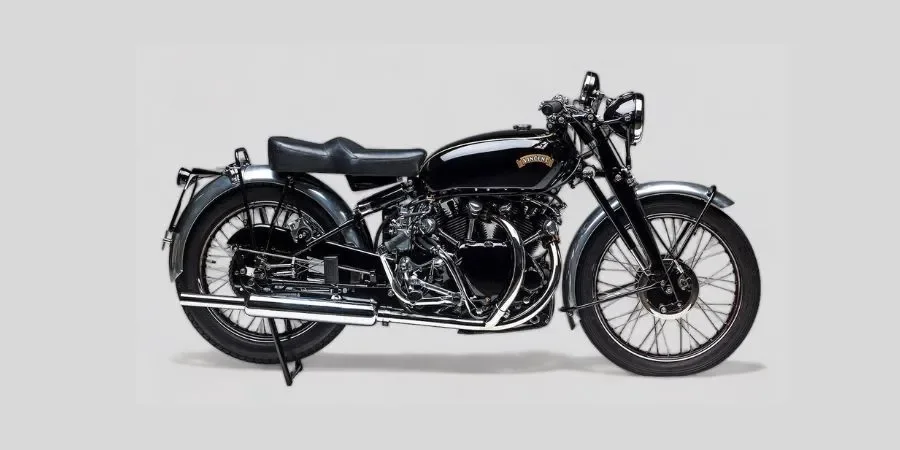
Vincent Black Shadow
Ducati 916 SPS vs. Porsche 993 Carrera Coupe
The Porsche 993 - the last air-cooled 911 - has become one of the defining collector cars of its generation. Values have climbed steadily for a decade. A clean driver-grade example today sits around $90,000.
The Ducati 916 SPS is the homologation special that made Carl Fogarty's World Superbike dominance possible. Designed by Massimo Tamburini - the man behind the 916 road bike, widely considered the most beautiful motorcycle ever drawn - the SPS was lighter, more powerful, and more focused than the standard 916. It is a race car with indicators. In 1998, the Guggenheim in New York chose the 916 as the centrepiece of its landmark Art of the Motorcycle exhibition - the most visited show in the museum's history at the time.
Current market for a clean 916 SPS: around $30,000.
Three times cheaper than a 993. More exclusive. More historically significant in its own world. And arguably the more beautiful object of the two.
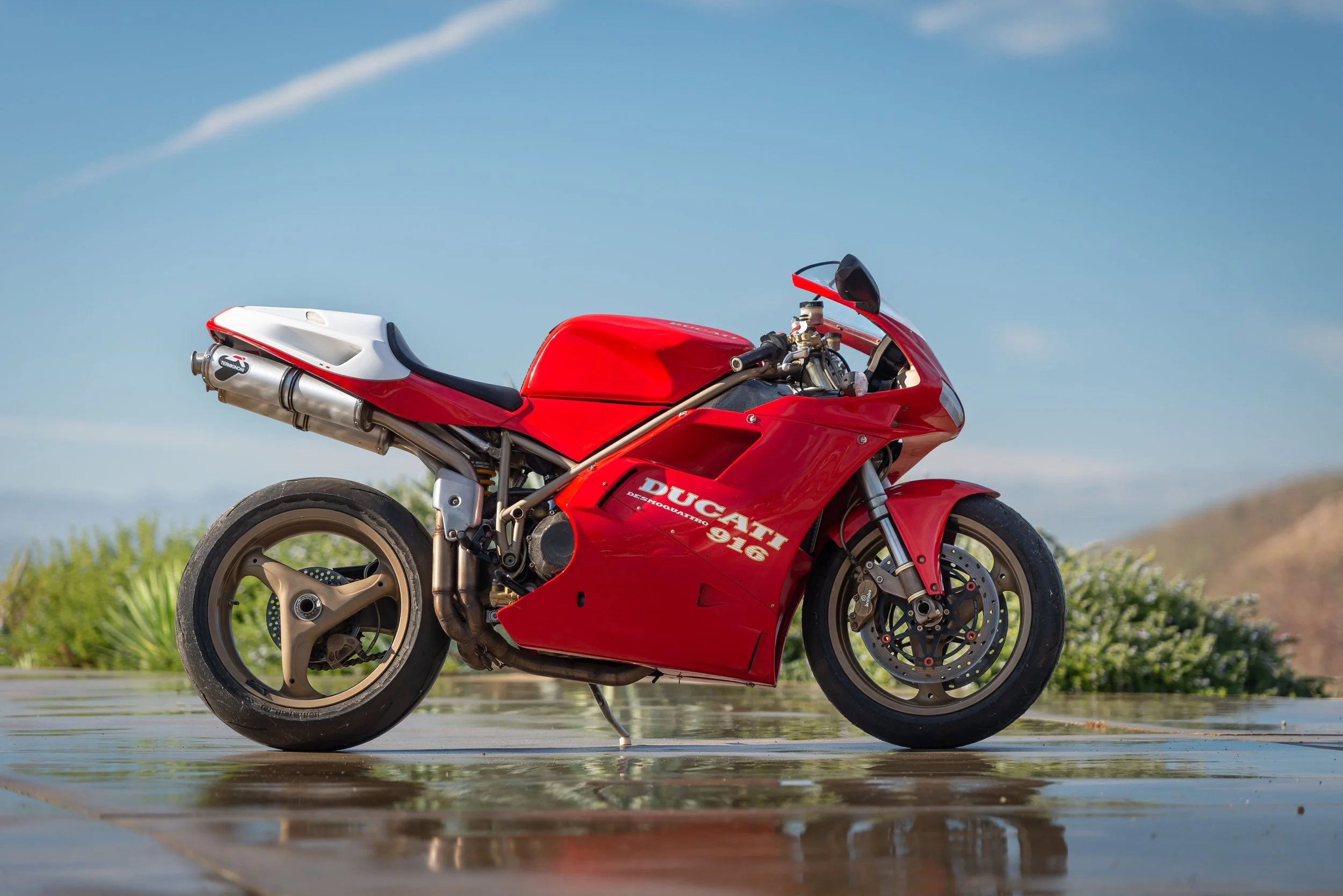
Ducati 916 non-SPS - Massimo Tamburini Masterpiece
Ducati 750SS Green Frame vs. Ferrari 275 GTB/4
The Ferrari 275 GTB is one of the most coveted Ferraris in existence. Beautiful, historically significant, and priced accordingly. A correct example today: around $3,200,000.
In 1972, a prototype Ducati arrived at the Imola 200 and beat everything on the circuit. Paul Smart won outright. Spaggiari finished second. The factory built a road-going version to celebrate - the 750SS, on an unpainted chrome-moly steel frame that collectors have referred to as the Green Frame ever since. Around 400 were made. Each one was essentially hand-assembled by craftspeople in Bologna who understood they were building something that mattered.
The Green Frame is the motorcycle that defined what Ducati would become. Every desmodromic V-twin that followed - every 916, every 998, every Panigale - traces a direct line back to that afternoon at Imola. At Mecum Las Vegas this January, a 1974 example crossed the block at $187,000. The best ones are approaching $200,000.
One-sixteenth the price of a comparable Ferrari. The founding document of the most important Italian motorcycle manufacturer of the 20th century.
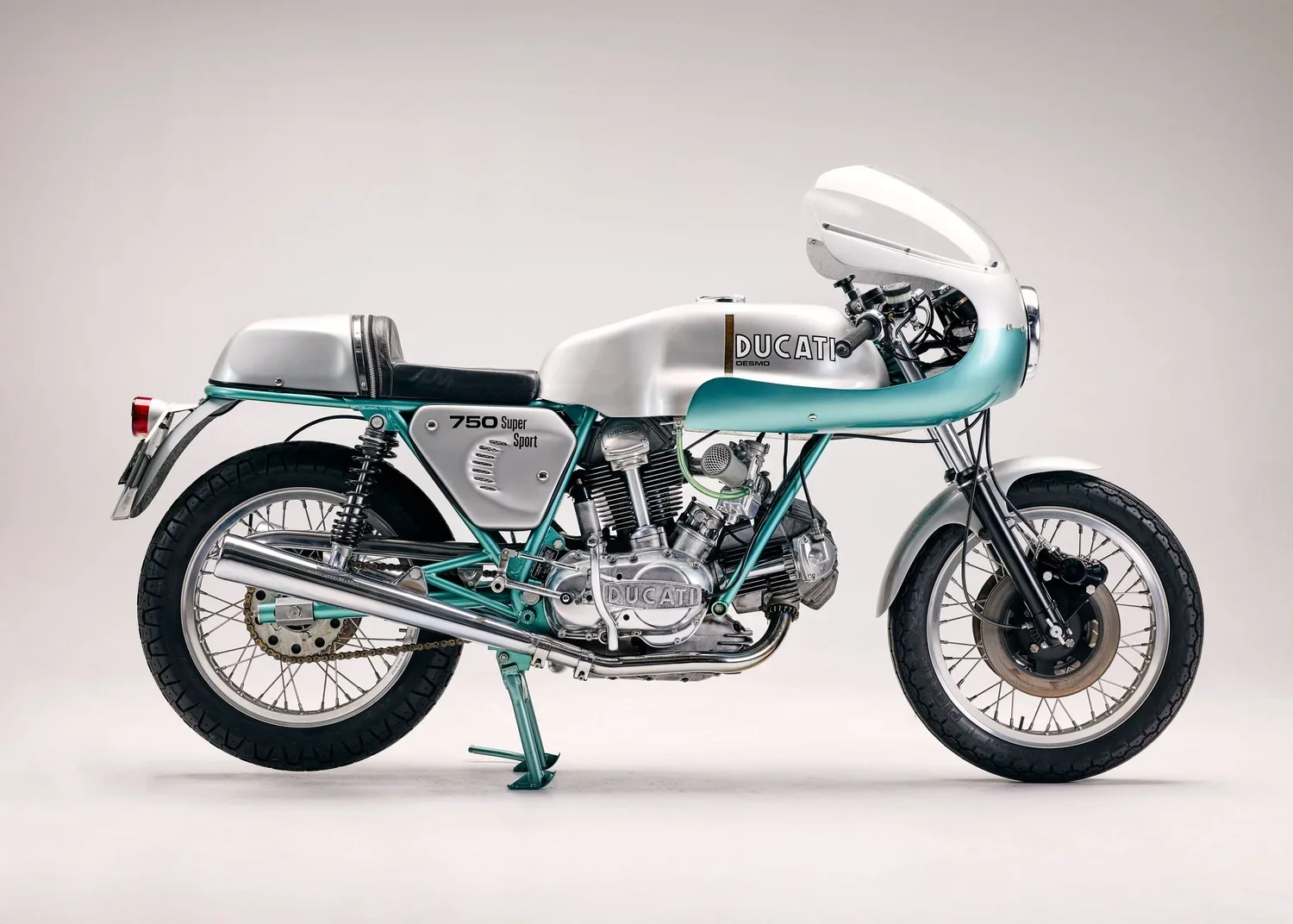
Ducati 750SS ‘Green Frame’
Ducati Supermono vs. Ferrari Enzo
The Ferrari Enzo was built to celebrate Ferrari's Formula 1 dominance. Four hundred were made. Named after the founder. Today: around $4,500,000.
The Ducati Supermono was built for one reason only: to win single-cylinder racing championships. Pierre Terblanche designed it. The engineering team solved the inherent vibration problem of a large-bore single by adding a dummy connecting rod - a second rod with no piston, its sole purpose to counterbalance the forces generated by the first. It is a solution so elegant it is almost philosophical. Sixty-seven were made. That is the entire production run.
The Supermono never raced at Le Mans. It never carried a famous name on its flanks. It exists in near-total obscurity outside the circle of people who understand it. Which is precisely why it is still available.
Current market for a correct, documented Supermono: around $150,000.
Thirty times cheaper than the Enzo. Rarer by a factor of six. And built with an engineering ingenuity that any serious collector - car or motorcycle - should find impossible to ignore.
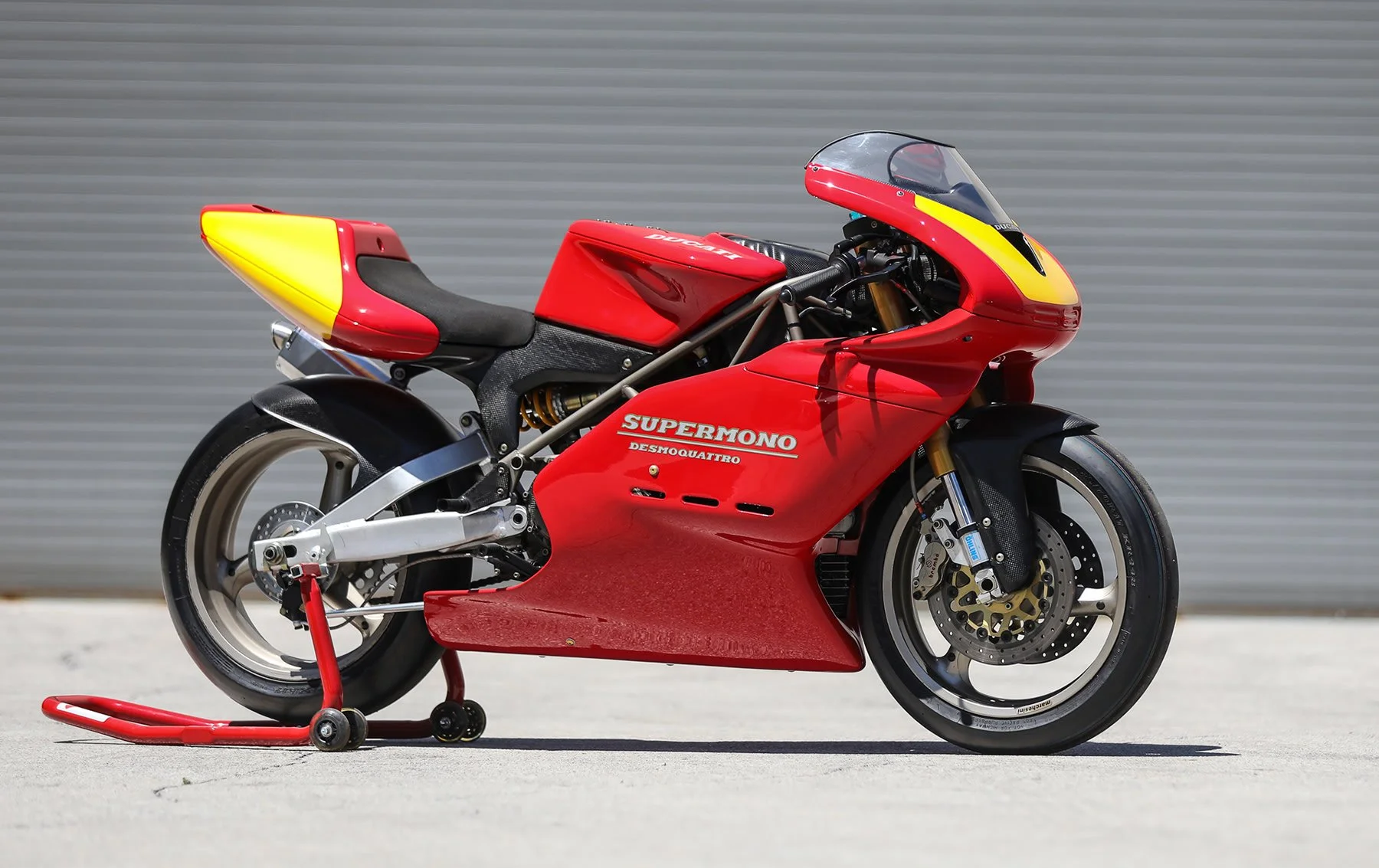
Ducati Supermono
Brough Superior SS100 vs. Ferrari 250 GT Berlinetta SWB
The Ferrari 250 GT is the most valuable production car in the world. At auction in 2026, a correct example: $8,000,000 to $10,000,000.
The Brough Superior SS100 is the motorcycle equivalent. T.E. Lawrence - Lawrence of Arabia - owned seven of them. He died from injuries sustained crashing his seventh, with the eighth already on order from the factory. The SS100 was guaranteed by the factory to exceed 100mph before delivery - not claimed, guaranteed, in writing, on every single machine. A pre-war motorcycle. Each one was essentially hand-built to order. George Brough was as meticulous as Enzo Ferrari and as obsessive as Philip Vincent. Only 383 were made between 1924 and 1940.
Collectors who understand what a Brough represents have known for a long time that these machines were mispriced relative to their four-wheeled counterparts. Current market for a correct, documented SS100: around $250,000.
One-fortieth of the price of the 250 GT SWB. The same irreplaceability. The same hand-craftsmanship. The same direct line to a genius who is no longer with us.
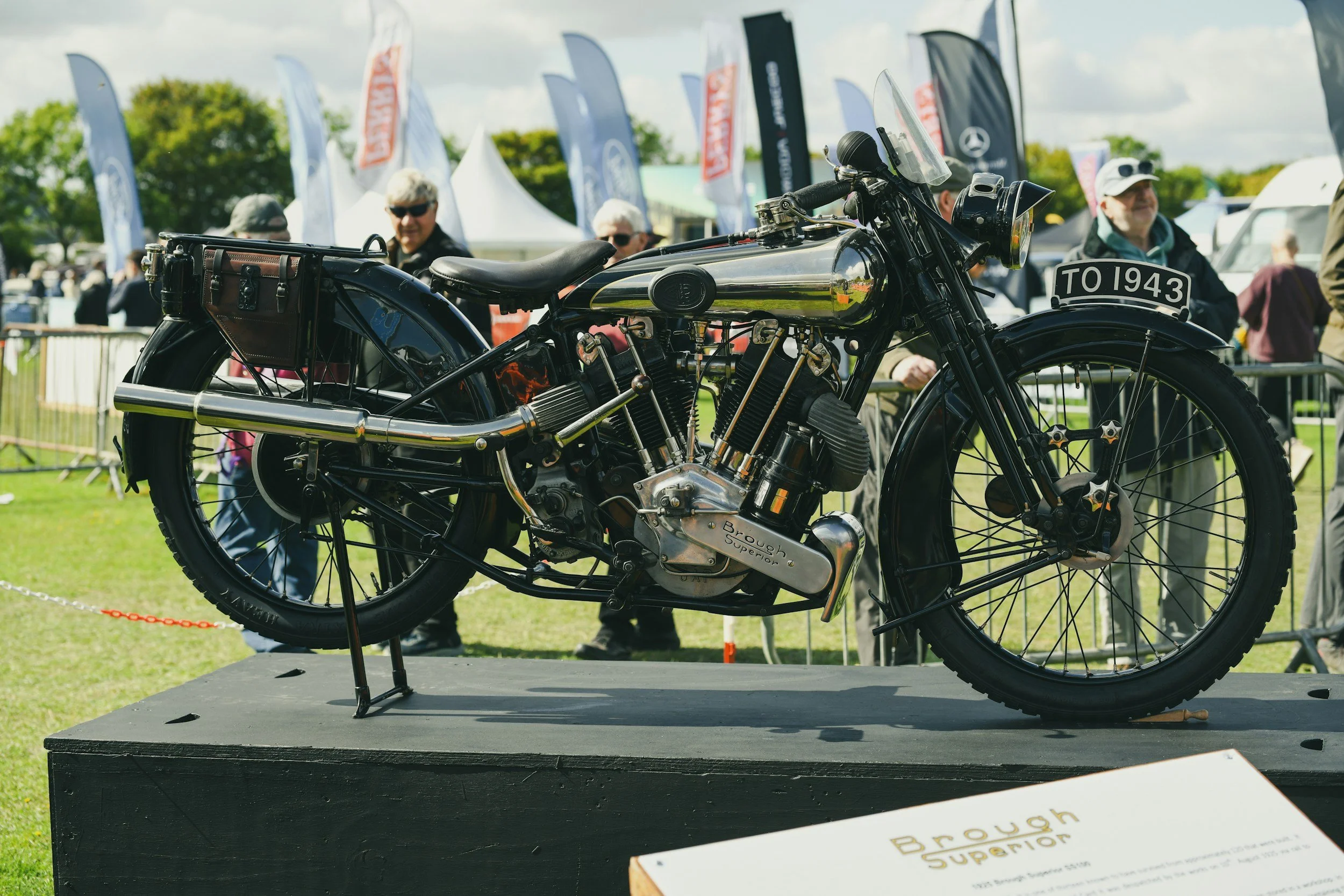
Brough Superior SS100
The argument
None of this is a coincidence. The motorcycle market has historically been smaller, less institutional, and less visible than the collector car market. The buyers are fewer. The auction houses that specialise in bikes are fewer. The press coverage is a fraction of what cars receive.
And right now, the market is soft. As I wrote earlier this year, the January Mecum Las Vegas auction - the biggest stage for collectible motorcycles in the world - posted its lowest average sale price since 2018. The serious bikes are conspicuously absent from the auction floor. The Brough Superiors, the Crockers, the Supermonos - their owners are holding. Waiting. Motorcycles follow the car market with a delay, and the people who own the finest examples know better than to sell into a cooling room.
What that means for a buyer paying attention is simple: the market is offering you the dip.
The machines are the same. The history is the same. The rarity is the same. The comparison to their four-wheeled equivalents is just as stark as it has ever been. The only thing that has changed is that there are fewer of them on the market - which, if you know how this works, is not a reason to wait. It is a reason to move.
The collectors who understand this space have always played a longer game. The cycles just take longer to turn. But they do turn.
God Save the Wheels.
