The room is changing.
Not the physical room - the auction floor still looks the same, the catalogues are still glossy (although they are getting smaller and smaller), the well-dressed Specialists are still running around to bring bids. But the people raising their hands are different. The cars they want are different. And if you have been paying attention over the past three or four years, the direction of this shift is no longer a question. It is a fact.
When I started at Bonhams in 2019, the collector car market was still very much a baby boomer conversation. The cars that moved with urgency were the ones that generation had grown up dreaming about - mostly post-war cars that we would call today ‘Oldtimers’. Those cars had been the backbone of the hobby for decades, and the buyers who wanted them were the ones with the means to pay. It was a market built around a single generation's nostalgia, and for a long time, that worked.
It is not working the same way anymore.
The numbers tell the story
According to Hagerty's data, Gen X, millennials, and Gen Z now account for roughly 64% of collector car insurance quotes. That is not a fringe segment. That is the majority. And while boomers saw a temporary bounce in 2025 - reclaiming about 36% of quote share - the long-term trajectory is clear. The generation that built this market is aging out. The generations behind them are stepping in. And they are not buying the same cars.
Hagerty's 2025 year-end numbers showed the total auction and private sale market for collector vehicles at $4.8 billion, up 10% from the year before. Online sales alone hit $2.5 billion - up 12%. That online number matters, because it tells you something about who is buying. Younger collectors are more comfortable transacting digitally. They have grown up on Bring a Trailer and Cars & Bids. They do not need the theater of a live auction to feel confident about a purchase. They just need the information.
Meanwhile, traditional American muscle - the kind that once anchored every major sale - saw values slip. Hagerty reported a roughly 12% decline on certain blue-chip muscle cars. A clean 1965-1966 Mustang GT that would have drawn aggressive bidding five years ago now sits longer, and the final number is softer. Not because the car is less significant, but because the buyer pool that cared most about it is contracting.
What Gen X and millennials actually want
I watched this shift happen in real time at Broad Arrow in 2022 and 2023. The lots that generated the most energy, the most pre-sale inquiries, the most competitive bidding - they were not the traditional trophies. They were the cars that a 40- or 45-year-old remembers from a bedroom poster or a video game. Cars that feel analog and engaging without feeling ancient.
Japanese sports cars from the 1990s. The Skyline GT-R. The NSX. The Supra. These are not emerging anymore - they have emerged. Hagerty's 2026 Bull Market List includes a 1995-1998 Nissan Skyline GT-R at over $82,000 in condition #2 and a 1999–2005 Mazda MX-5 Miata at around $16,600. Five years ago, neither of those would have been taken seriously in a traditional auction catalogue. Today they are institutional picks for appreciation.
Then there are the modern supercars - cars that straddle the line between collector piece and usable performance machine. The Porsche Carrera GT made Hagerty's 2026 list at $1.55 million. The C6 Corvette Z06 is on there at $55,900. The E60 BMW M5 at $36,000. These are not barn finds. They are recent, high-production numbers high-performance vehicles that a new generation of collectors considers just as worthy of preservation as a numbers-matching E-Type. The difference is you can actually drive them without anxiety.
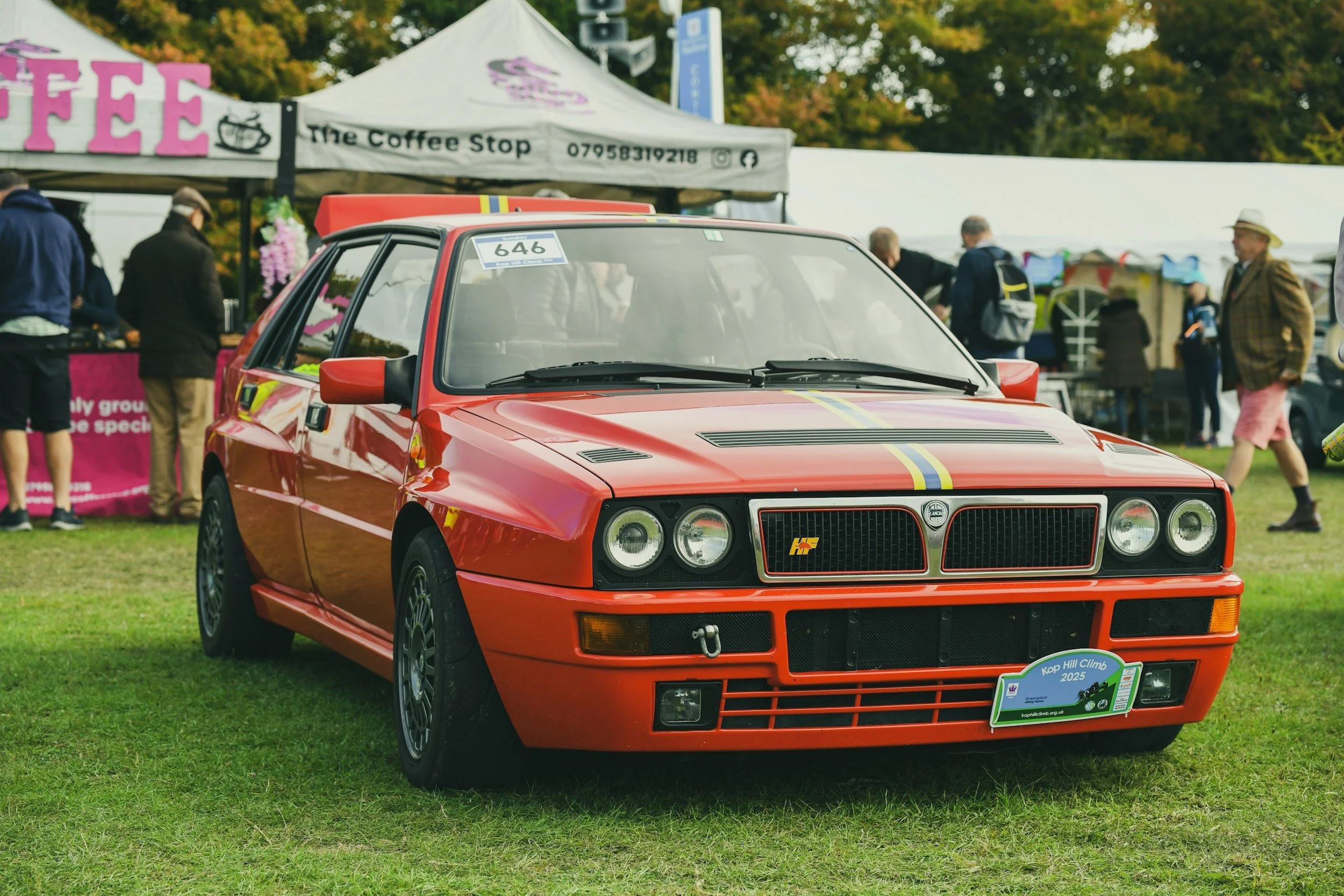
Lancia Delta HF
The real shift is not just about age - it is about approach
What I find most interesting, having worked both sides of this market, is not just that the vehicles are different. It is that the buying behavior is different.
The boomer collector market was largely built on local knowledge, long-standing dealer relationships, and a comfort level with traditional auction houses. You knew a guy. You trusted a name. You showed up, looked at the car the morning of the sale, and bid on instinct and experience.
The younger collector does not operate that way. They research obsessively. They want production data, chassis histories, service records, and ideally forum threads full of dudes validating their choice. They compare prices across platforms before placing a bid. They are less brand-loyal to auction houses and more likely to buy wherever the best information and the best deal intersect. They buy cars the way they choose a restaurant - best reviews, best value, and somewhere they want to be seen. They are data-driven in a way the previous generation, broadly speaking, was not.
This is not a criticism of either approach - they are products of different eras. But it does mean that the market infrastructure is adapting. Online platforms are growing because they serve this buyer well. Auction houses that invest in detailed cataloguing, transparent condition reports, and accessible digital bidding are winning share. Those that rely purely on heritage and spectacle are finding it harder to fill consignment slots.
We have seen this before
This is not the first time the collector market has gone through a generational handover. It has just been long enough that most people have forgotten.
Pre-war cars - the Duesenbergs, the Bugattis, the coachbuilt Rolls-Royces - were once the undisputed pinnacle of the hobby. While still very present on Concours lawns, those machines became less and less of interest for the Baby Boomers when they were ready to spend money on the hobby.
Post-war European sports cars and American muscle took over - the Ferraris, the Jaguars, the Cobras, the Porsches. Not because pre-war cars stopped being extraordinary, but because the new wave of buyers in their peak earning years connected with something different. The best pre-war examples still trade, and they still trade well. But the depth of the market - the number of active, competitive buyers for anything short of the very best - has narrowed considerably. A good but not exceptional pre-war car today can sit for months in a way it never would have in the late-80s.
That same pattern is now playing out one generation later. The post-war icons that defined the market from the 1990s through the 2010s - the 250 GTs, the E-Types, the 911S Targas - are entering the early stages of the same compression. The very best will always be the very best. But the broad middle of that market is softening, because the generation that drove demand for those cars is the same one now downsizing, and the generation replacing them at the bidding paddle has a different set of references.
The 1980s, 1990s, and 2000s are stepping into the role that post-war cars held for the last thirty years. It is not a collapse of the old guard - it is a rotation. And if history is any guide, it will be gradual enough that many people will not recognize it until it is already well advanced.
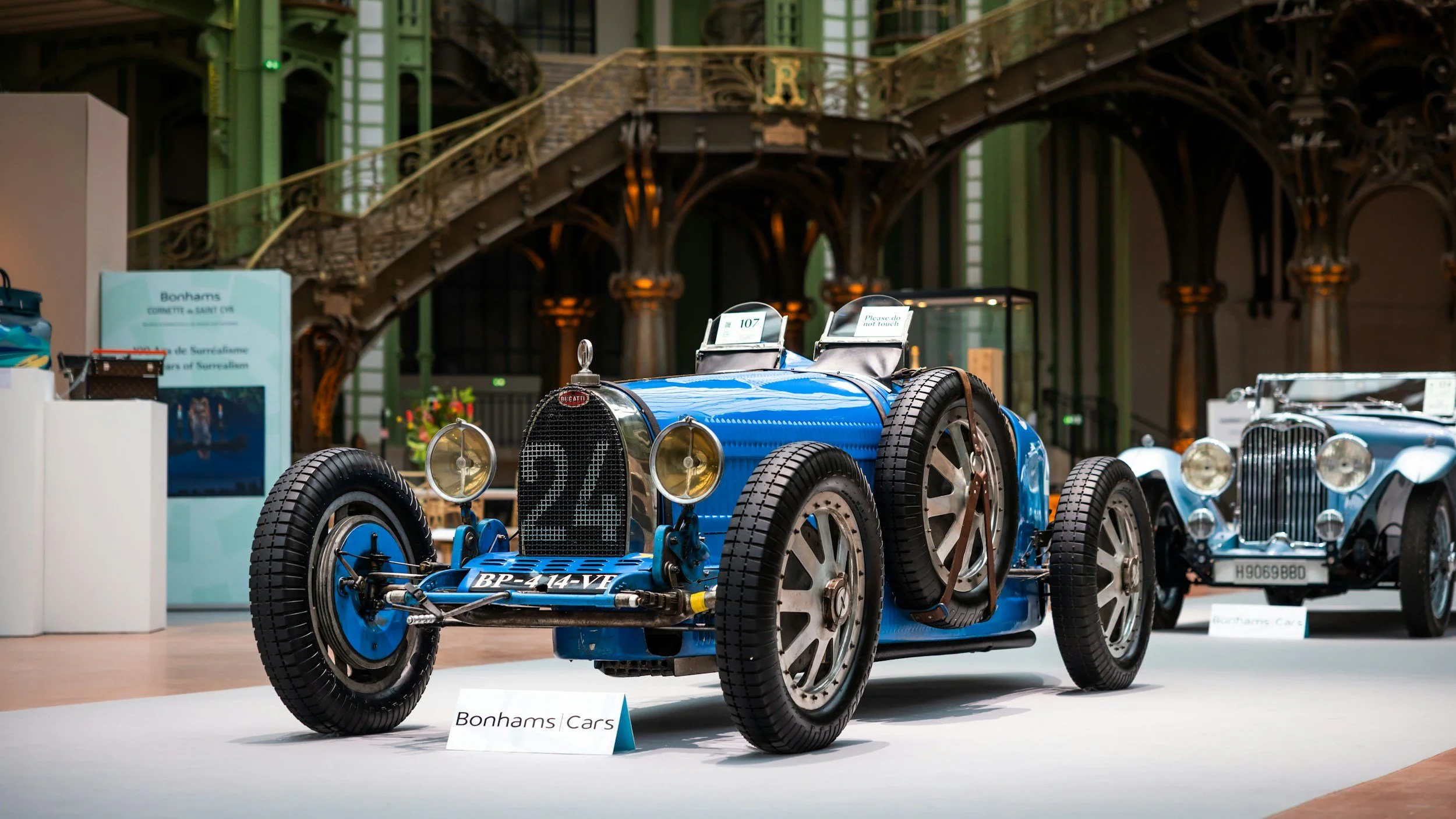
1928 Bugatti Type 35B Grand Prix Recreation
Where this is heading
The generational transition in the collector car market is not a blip. It is structural. Boomers will continue to sell - downsizing collections, settling estates, simplifying. Gen X is in peak earning years and buying aggressively. Millennials are entering the market in larger numbers, though Hagerty's 2025 data suggests homeownership and life-stage costs have temporarily slowed some of that momentum. That will pass.
What will not pass is the fundamental realignment of what counts as collectible. The definition is widening. Cars from the 1980s, 1990s, and 2000s are now legitimate collector vehicles, and their values are being set by buyers who have genuine emotional connections to them - not by speculators chasing the next wave.
For anyone buying or selling in this market, the takeaway is practical. The cars that will hold and gain value over the next decade are the ones that the incoming generation cares about. That does not mean pre-war cars or 1960s European sports cars are finished - the best examples always find buyers. But the floor is rising under modern classics, and the ceiling on some traditional categories is compressing.
Understanding who is buying, what they want, and how they buy is no longer optional knowledge. It is the baseline for making informed decisions - whether you are building a collection, selling one, or just trying to figure out what your car is actually worth in today's market.
God Save the Wheels
